

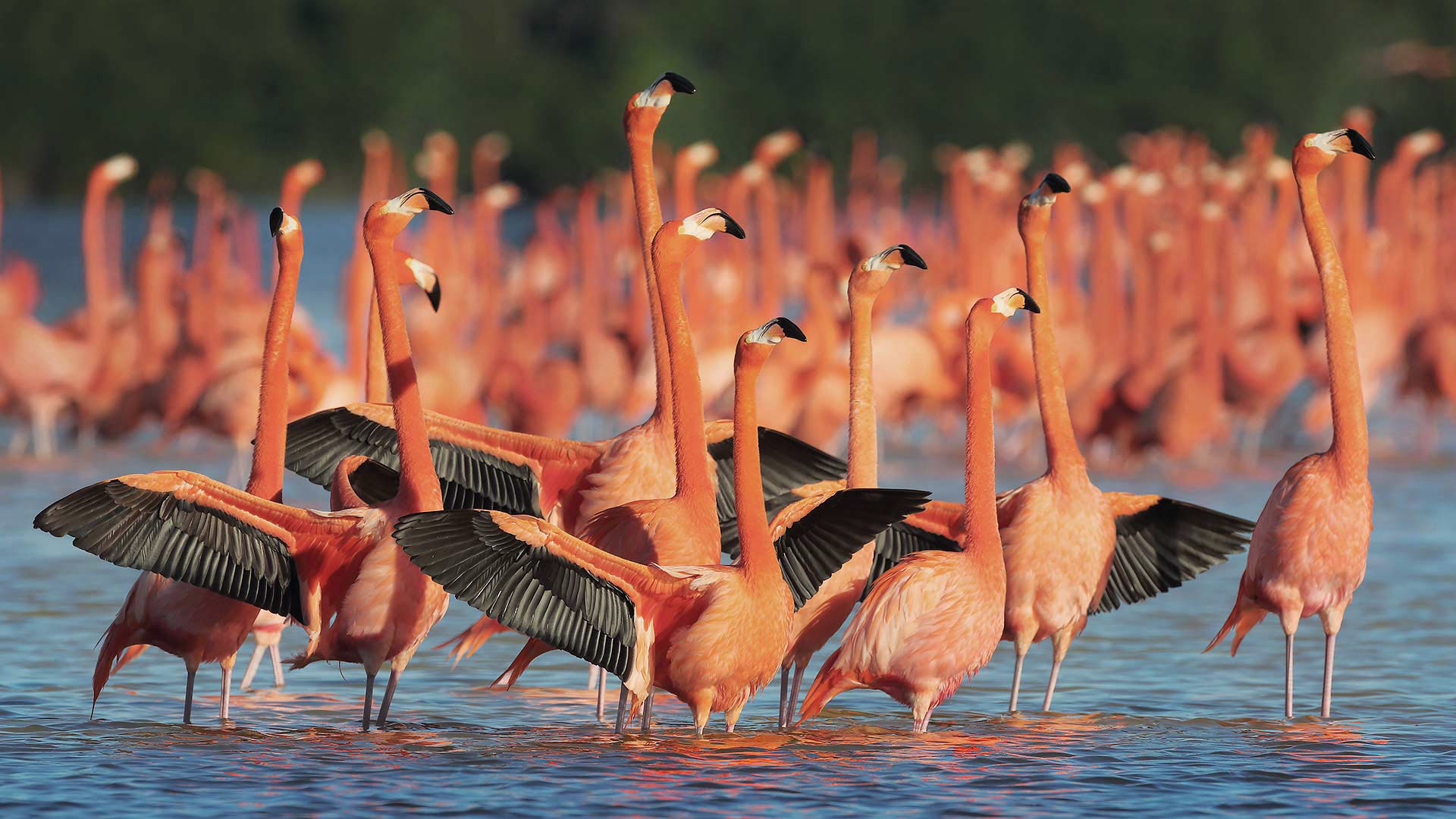
Distribution, abundance and age composition of flamingo ( Phoenicopterus ruber ) flocks outside their breeding areas in Yucatan wetlands, Mexico
ABSTRACT
The pink flamingo (Phoenicopterus ruber) is a bird species with regional populations in the insular and continental Caribbean that has a particular conservation status. This paper presents the preliminary results of the census of the populations of this species in the wetlands of Yucatan during an annual cycle (2011-2012), with the objective of determining its abundance and distribution within the area of the state of Yucatan. The results show that there are four regions of importance for this species, with population abundances of 325.4 ± 186.8 birds per count station (n=450). The distribution was wide, being located in most of the transects (n=22) and study areas, although six sites were shown to be selected as main refuges within three regions. The analysis of the sites where P. ruber was recorded shows differences according to the seasonality of the year; however, the results suggest that the abundance of the species depends mostly on the life cycle and habitat conditions, which allows inferring preferences according to age group. Because studies of the flamingo population in the state of Yucatan in the last twenty years have focused on its reproductive phase or behavior, the data obtained in this study are useful to understand some aspects of its non-reproductive ecology, as well as to know the flamingos' refuge sites by age group.
ABSTRACT
Caribbean flamingo (Phoenicopterus ruber) is an avian species with Caribbean-wide and borderline continental populations that face a particular conservationist situation. In this paper we showed preliminary results of censuses to populations in Yucatan wetlands during an annual cycle (2011-2012), with the objective to evaluate its abundance and distribution inside the Yucatan state. Results showed four regions of higher importance for the species, with mean population abundances of 325.4 ± 186.8 individuals per counting station (n=450). The species was widely distributed, founded in most part of transects and study areas (n=22), but select six sites as main refugee in three regions. The analysis of P. ruber occurrence sites showed differences by season, but results suggest that abundance mostly depend on life cycle and habitat condition, and difference in preferences by age group. Giving that most studies in the last 20 years in Yucatan flamingos' populations had been focused in the reproductive season or behavior, distributional data gathered in this study are useful to understand some aspects of the nonreproductive ecology, as well as, to identify concentration sites by age group.
You can read the complete article by clicking on the button
 English
  Español